In a world where gas prices are skyrocketing faster than a squirrel on espresso, electric cars have become the superhero of the automotive universe. They promise to save the planet while keeping your wallet happy. With an impressive lineup of sleek designs and cutting-edge technology, the best electric cars are here to redefine how we think about driving.
Overview of Electric Cars
Electric cars grow in popularity as more consumers seek alternatives to traditional gasoline vehicles. They reduce dependence on fossil fuels while offering lower operational costs. With advancements in battery technology, many electric vehicles now provide impressive ranges, often exceeding 300 miles on a single charge.
Charging infrastructure expands rapidly, simplifying access to power solutions in urban and rural areas. Public charging stations increase in number, making road trips convenient and efficient. Many drivers consider home charging setups, which allow overnight charging for daily commuting.
Environmental benefits remain a significant factor in the rising interest in electric cars. Lower greenhouse gas emissions help contribute to cleaner air and a healthier planet. Renewable energy sources power electric grids, further enhancing the sustainability of electric vehicle usage.
Appealing designs capture consumer interest, with numerous manufacturers offering stylish options. Interior technology continues to impress with smart features that enhance the driving experience. Numerous models incorporate advanced driver-assistance systems, ensuring both safety and convenience.
Incentives from governments also play a critical role in promoting electric vehicle adoption. Federal tax credits and state rebates reduce the financial burden of purchasing an electric car. As a result, the marketplace for electric vehicles diversifies, providing consumers with a wide array of choices and price points.
Top Contenders for Best Electric Cars
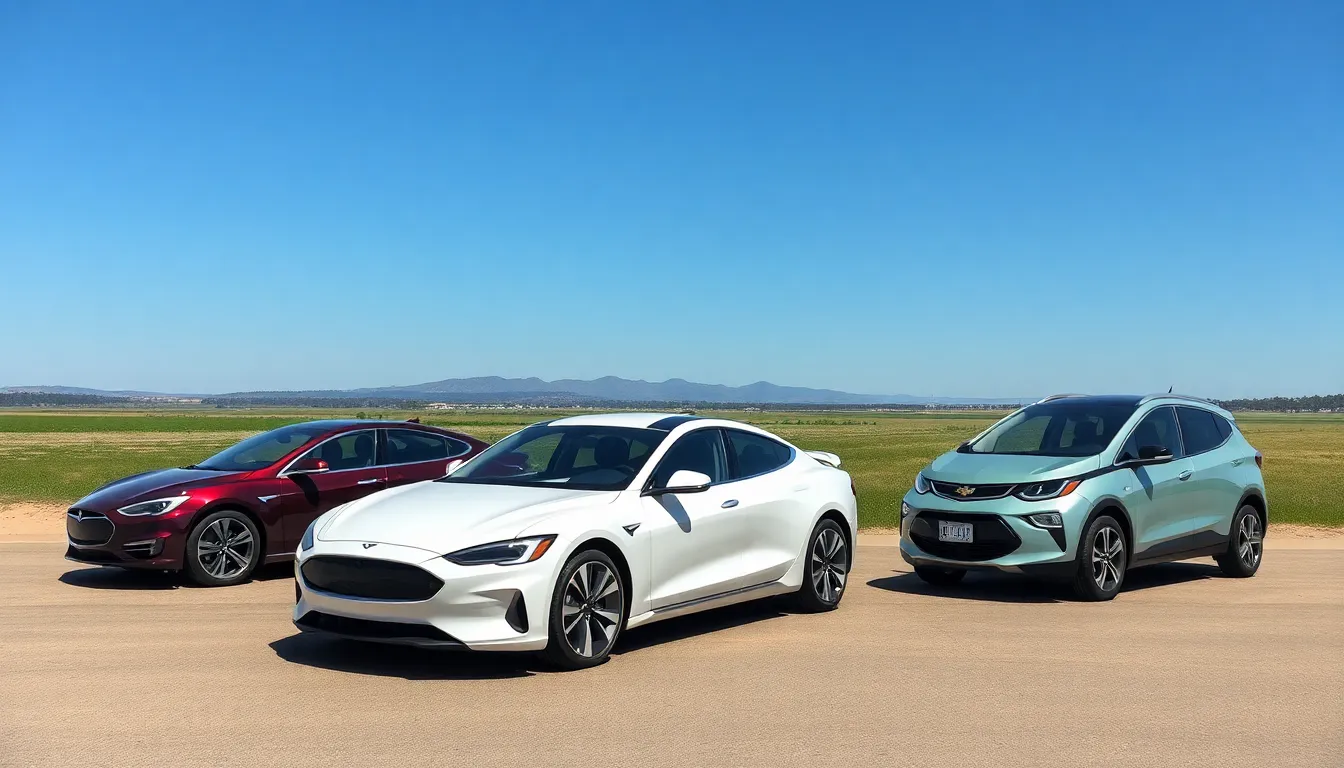
Several electric car models dominate the market as consumer interest continues to rise. Below are key contenders worth exploring.
Tesla Models
Tesla remains a leader in electric vehicle innovation. The Model 3 boasts impressive range with over 350 miles per charge, catering to diverse driver needs. The Model S features a luxurious interior and exceptional performance, including 0-60 mph in just 1.99 seconds. Model Y offers ample space combined with cutting-edge Autopilot features, enhancing overall safety. Tesla’s Supercharger network ensures convenience for long-distance travel, reducing range anxiety.
Ford Electric Vehicles
Ford’s entry into the electric market demonstrates commitment to sustainability. The Mustang Mach-E achieves up to 300 miles on a single charge, appealing to performance enthusiasts. The F-150 Lightning, an electric version of the iconic truck, blends utility with state-of-the-art technology, allowing it to function as a power source. Ford’s investments in charging infrastructure support widespread accessibility, allowing users to enjoy stress-free ownership.
Chevrolet Electric Options
Chevrolet introduced the Bolt EV, known for its affordability and practicality. Capable of over 260 miles per charge, it addresses budget-conscious consumers seeking efficiency. The upcoming Blazer EV aims to combine style with functionality, offering spacious interiors and exciting features. Chevrolet also emphasizes charging options, ensuring drivers can easily access solutions tailored for home and public use.
Factors to Consider When Choosing an Electric Car
Choosing the right electric car requires careful consideration of several key factors. Buyers often prioritize range, charging options, and price to determine the best fit for their needs.
Range and Battery Life
Range and battery life are crucial factors. Many electric cars offer ranges exceeding 300 miles on a single charge, appealing to long-distance drivers. The Tesla Model 3, for example, boasts a range of up to 353 miles. Battery lifespan also plays a role, with most manufacturers providing warranties of eight years or 100,000 miles. Understanding both range and battery performance ensures drivers maintain optimal usability over time.
Charging Infrastructure
Charging infrastructure significantly influences the ownership experience. A robust network of charging stations enhances convenience, especially for urban and rural users. Tesla’s Supercharger network allows for quick charging on long trips, while other manufacturers collaborate with networks like Electrify America. Some electric cars offer home charging solutions, making it easier to charge overnight. Drivers should assess the availability of charging options in their area to ensure compatibility with their lifestyle.
Price and Affordability
Price and affordability are essential considerations when choosing an electric car. The Chevrolet Bolt EV stands out as a budget-friendly option, starting around $26,000. Government incentives, such as federal tax credits and state rebates, can further reduce costs. Buyers should compare not only the upfront price but also long-term savings on fuel and maintenance. Understanding total cost of ownership helps potential buyers make informed decisions.
Pros and Cons of Electric Cars
Electric cars offer distinct advantages that attract many consumers. First, lower operational costs significantly reduce expenses on fuel and maintenance. For instance, electric vehicles (EVs) typically have fewer moving parts, leading to decreased maintenance needs compared to traditional gas vehicles.
Moreover, environmental benefits play a crucial role in their appeal. EVs produce fewer greenhouse gas emissions, contributing positively to climate change mitigation. The use of renewable energy sources for charging further enhances their eco-friendliness.
Charging infrastructure continues to expand, providing easier access for drivers. Tesla’s Supercharger network exemplifies this growth and supports long-distance travel. Additional partnerships, such as those with Electrify America, help improve charging accessibility across various regions.
On the downside, charging time can present challenges. While rapid chargers significantly decrease wait times, they still require more time compared to refueling at a gas station. This constraint may deter potential buyers, particularly those with high mileage needs.
Range anxiety remains a common concern for many. Although several models, like the Tesla Model 3, offer over 350 miles of range, some consumers worry about running out of battery on long trips. Current advancements in battery technology continue to address this issue, though.
Price considerations also factor into the decision-making process. Although the Chevrolet Bolt EV starts around $26,000, many electric vehicles come with higher price tags. Government incentives, such as federal tax credits and state rebates, help alleviate some of these costs but may not offset the price differential completely.
Pros and cons vary for each consumer, depending on individual preferences and circumstances.
Future Trends in Electric Vehicles
Electric vehicles continue to evolve rapidly, with various trends shaping their future. Increased battery efficiency stands out, with newer models targeting ranges exceeding 400 miles on a single charge. Manufacturers invest significantly in research and development, pushing for lighter materials and enhanced energy density.
Charging infrastructure will likely expand, addressing distance and access challenges. Urban areas will see more charging stations, while rural locations will also benefit from increased availability. Innovations like fast chargers are making it easier for drivers to recharge in minutes rather than hours.
Integration of advanced technology features is another key trend, with many electric vehicles incorporating over-the-air updates and autonomous driving capabilities. Consumers can expect greater connectivity, allowing for seamless integration with smartphones and smart home devices. Electric cars will also focus on enhancing user experience through intuitive interfaces and advanced safety systems.
Sustainability efforts within the industry will likely gain momentum. Many manufacturers are committing to carbon-neutral production processes, utilizing recycled materials in vehicle construction. Renewable energy sources are becoming more prevalent for charging, further reducing the carbon footprint associated with electric vehicles.
As competition ramps up among automakers, consumers can anticipate a broader range of options. Diverse models will cater to varying needs, from compact city cars to powerful SUVs. The market is expected to diversify with more affordable options emerging, ensuring wider accessibility for consumers.
Government incentives will likely continue promoting electric vehicle adoption. Federal tax credits and state rebates remain essential in reducing the financial barriers for buyers. These policies may further accelerate market growth and foster a greener automotive future.
The electric car market is rapidly evolving and offers a promising future for drivers seeking sustainable and cost-effective transportation options. With advancements in battery technology and an expanding charging infrastructure, consumers can enjoy impressive ranges and convenient access to power solutions.
Innovative designs and advanced technology enhance the driving experience while government incentives make these vehicles more accessible. As automakers continue to innovate and compete, the variety of electric cars available will only grow.
This shift towards electric vehicles not only benefits individual drivers but also contributes to a greener planet. Embracing this trend can lead to significant savings and a more sustainable future for all.