Drones have soared from mere toys to powerful tools, transforming how we share information. Imagine a world where live events are broadcasted from the sky, giving viewers a bird’s-eye view that’s both thrilling and immersive. With drone broadcast applications, that world isn’t just a fantasy; it’s happening right now.
Overview of Drone Broadcast Applications
Drones serve multiple broadcast applications, reshaping how information is relayed to the public. Live aerial coverage presents a new dimension in multimedia storytelling. Sports events, for instance, leverage drones to capture dynamic action from above, enhancing viewer engagement.
News organizations utilize drones for quick access to hard-to-reach areas. In situations like natural disasters, the aerial perspective provides immediate updates and crucial information for responders. Schools and universities also embrace drones, using them for streaming events like graduation ceremonies and sports matches to a wider audience.
In entertainment, filmmakers increasingly rely on drones for breathtaking shots. Aerial shots contribute to storytelling by providing unique perspectives that traditional cameras cannot achieve. The film industry values this technology for its ability to convey grandeur and scale in visual narratives.
Advertising represents another significant area for drone applications. Brands deploy drones in promotional events, drawing attention through aerial displays of products. Creative campaigns often incorporate stunning views, maximizing impact and capturing consumer interest.
Public safety initiatives also benefit from drones, especially during emergencies. Law enforcement agencies use drones for surveillance, ensuring public safety and assisting in crowd control during large events. This application underscores drones’ value beyond entertainment and marketing.
Integration of drones into broadcasting continues evolving. Advanced technology enables high-definition video capture and real-time transmission, setting a new standard in media coverage. With their versatility and innovation, drones redefine broadcasting landscapes across various sectors.
Benefits of Drone Broadcast Applications
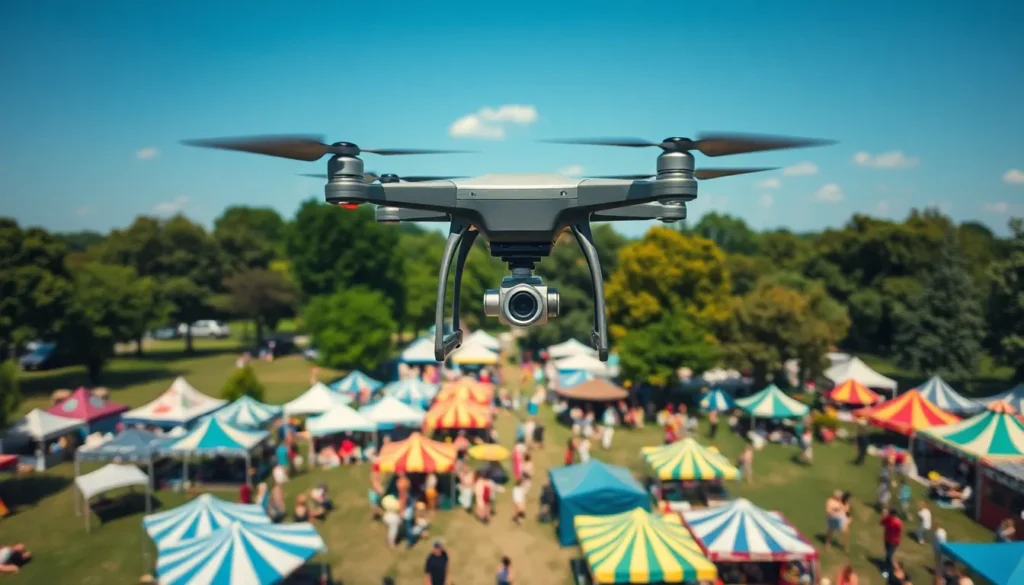
Drone broadcast applications provide significant advantages in the media landscape. The ability to deliver unique perspectives enhances storytelling and engages audiences in new ways.
Enhanced Real-Time Coverage
Drones enable swift access to breaking news situations. With the capability to fly over difficult terrain, they provide live feeds that inform viewers instantly. High-definition cameras capture critical events from above, ensuring nothing important goes unnoticed. Journalism benefits as reporters can deliver urgent updates faster, especially during emergencies. Furthermore, aerial coverage from drones enhances the visibility of events like sports and festivals. By offering dynamic visuals, drones elevate the overall viewing experience and keep audiences informed in ways traditional methods cannot.
Cost-Effectiveness
Utilizing drones for broadcasting significantly reduces operating costs. Compared to traditional helicopter coverage, drones require lower financial investment for equipment and operational expenses. Maintenance costs remain minimal, further enhancing their appeal. Organizations save on fuel and personnel while still achieving high-quality production. The operational efficiency of drones allows media companies to allocate resources to other storytelling aspects. Advertising and marketing efforts also benefit from this cost-effective approach, enabling brands to enhance outreach without breaking the bank.
Key Industries Utilizing Drone Broadcast Applications
Drones are gaining traction across various industries, enhancing their broadcasting capabilities and revolutionizing traditional methods.
Media and Journalism
Media organizations employ drones to deliver timely and immersive news coverage. Aerial perspectives allow journalists to showcase events from unique angles, providing viewers with a fresh look at ongoing stories. Drones facilitate quick assessments of hard-to-reach locations, particularly during natural disasters, ensuring immediate updates reach the public. Specific cases demonstrate how drone footage captured critical moments in breaking news situations, informing both responders and audiences effectively.
Sports and Events
Sports events benefit from drone technology as it captures high-energy action from above. Live aerial broadcasts engage fans while offering unprecedented views of the competition. Drones enhance production quality through dynamic shots that traditional cameras cannot match. Major events, such as marathons and festivals, incorporate drones to stream highlights, elevating audience experience and expanding reach to those unable to attend in person.
Emergency Services
Emergency services rely on drones for monitoring and assessing situations, especially during crises. Aerial footage assists in surveying disaster areas, helping responders allocate resources efficiently. Law enforcement uses drones for surveillance, improving crowd management during large gatherings. Drone applications in emergencies not only speed up information gathering but also ensure public safety through real-time updates and support for ground teams.
Challenges Facing Drone Broadcast Applications
Drone broadcast applications face several challenges that hinder their full potential. Regulatory issues and technical limitations require careful consideration.
Regulatory Issues
Regulatory challenges present significant barriers for drone broadcasting. Government agencies impose strict regulations governing airspace use and flight permissions, limiting operational flexibility. Various states and countries enforce differing laws, creating confusion for broadcasters. Licensing requirements add complexity to deployment, as timely access to specific areas becomes problematic. Compliance with privacy laws also becomes crucial, especially when drones capture sensitive information. Overall, navigating these regulations can delay the implementation of drone technologies in broadcasting.
Technical Limitations
Technical limitations pose additional hurdles for drone broadcast applications. Battery life remains a critical concern, as most drones operate for only 20 to 30 minutes per charge. High-definition video quality requires substantial data transmission capabilities, which some drones struggle to support. Wind conditions and adverse weather can disrupt flight stability, leading to unreliable broadcasts. Additionally, live streaming from drones demands robust connectivity, which isn’t always available in remote locations. Effectively addressing these limitations is essential for improving drone broadcast reliability and quality.
Future Trends in Drone Broadcast Applications
The landscape of drone broadcast applications continues to evolve rapidly. Emerging technologies drive innovation and expand functionalities, improving user experiences across various sectors.
Advancements in Technology
New advancements in drone technology enhance broadcast capabilities significantly. Companies focus on developing drones equipped with high-resolution cameras, improving image quality and clarity during events. Improved battery longevity allows for extended flight times, enabling coverage of larger areas without interruptions. Innovations in AI-driven software streamline aerial data processing, making live editing and transmission more efficient. Enhanced connectivity options, including 5G integration, facilitate real-time streaming, ensuring audiences receive instantaneous updates. These technological strides promise to redefine how broadcasters capture and share dynamic content.
Potential Market Growth
Market research indicates robust growth potential for drone broadcast applications. As more industries recognize the benefits, increased investment from media and entertainment organizations becomes evident. Analysts project that the drone broadcast market will reach approximately $1.5 billion by 2025, reflecting a compound annual growth rate of over 20%. Multiple sectors, including agriculture, real estate, and safety inspections, are exploring these applications to enhance visuals and improve operational efficiency. This growth indicates that drones are becoming essential tools, not just in journalism and entertainment, but across various industries that prioritize innovative storytelling and information dissemination.
The integration of drones into broadcasting is transforming the landscape of media coverage. Their ability to provide unique aerial perspectives enhances storytelling and captivates audiences. As technology advances and regulations evolve, the potential for drones in various sectors continues to expand.
From live sports coverage to emergency response, drones offer an efficient and cost-effective solution for delivering timely information. The growing market indicates a bright future for drone broadcast applications, promising innovative storytelling methods that engage viewers like never before. As industries adapt to these changes, the role of drones will undoubtedly become more prominent, reshaping how information is shared and experienced.