Drones are the flying gadgets that have taken the world by storm, and they’re not just for spying on neighbors or delivering snacks—though let’s be honest, that’s a tempting bonus. These high-tech marvels have transformed industries, from agriculture to filmmaking, making tasks easier and more efficient. Who wouldn’t want to send a little robot into the sky to capture breathtaking views or survey crops without breaking a sweat?
Overview of Drones
Drones, also known as unmanned aerial vehicles (UAVs), comprise various types and sizes to suit numerous applications. Equipped with advanced technology, these devices enable users to capture high-resolution images and videos from above. In agriculture, drones facilitate crop monitoring and data collection, enhancing yield and sustainability.
Commercial sectors increasingly adopt drones for tasks such as surveying, inspections and deliveries. Industries like construction utilize drones to provide real-time aerial insights, streamlining project management. Filmmakers benefit from drones by showcasing unique perspectives that enhance storytelling.
Massive investments propel drone development, leading to innovations in battery life, range and functionality. Regulations also shape the industry, with authorities like the Federal Aviation Administration (FAA) establishing guidelines for safe drone operation. Compliance with these regulations ensures that drone usage contributes positively to society while minimizing risks.
Emerging applications continually expand the drone market. Stadiums and events increasingly deploy drones for crowd monitoring and security. Environmental researchers rely on drones to analyze wildlife populations and assess habitat conditions.
Drones play a significant role in disaster management and emergency response. Agencies use drones to assess damage, locate survivors and deliver essential supplies during crises. This capability proves invaluable in real-time situations.
Overall, the future of drone technology holds promise. Advancements in artificial intelligence and automation are set to revolutionize how drones operate and interact with their environment. With ongoing developments and increasing adoption, drones will likely become integral components in various sectors.
Types of Drones
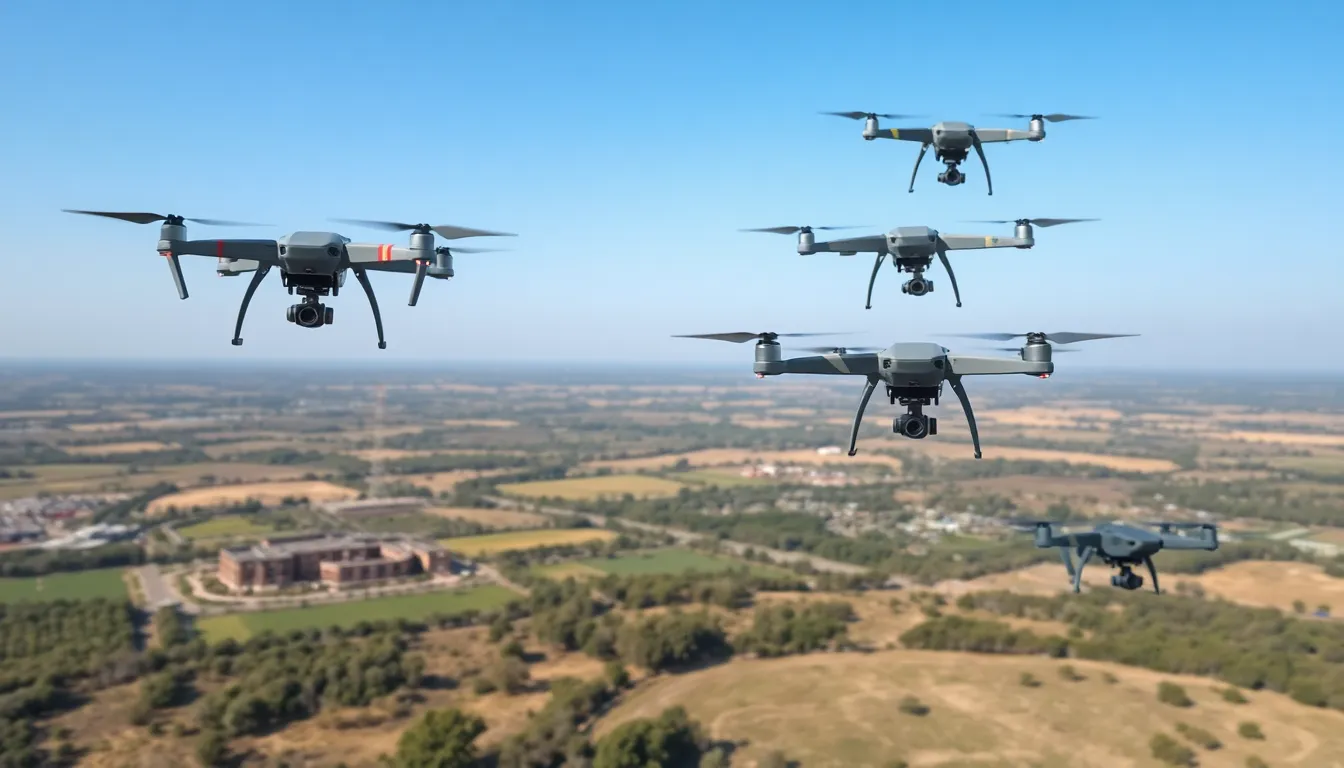
Drones come in various types, each designed for specific applications and purposes. Understanding these categories showcases their diverse functionalities and increasing importance across multiple sectors.
Commercial Drones
Commercial drones play a vital role in various industries. They serve in surveying, inspections, agricultural monitoring, and deliveries. Equipped with advanced sensors and cameras, commercial drones capture high-resolution images for analysis. Companies utilize drones to enhance efficiency and accuracy in project management. For instance, in construction, drones provide real-time aerial insights, streamlining workflow and monitoring progress. The global commercial drone market reached $6.43 billion in 2021 and is projected to grow at a CAGR of 53.8 percent through 2030. Therefore, they are revolutionizing business operations.
Recreational Drones
Recreational drones cater to hobbyists and enthusiasts. These drones come in lightweight, easy-to-maneuver designs and often feature built-in cameras for capturing aerial photography and video. They enable users to explore their creativity and enhance storytelling through unique perspectives. Many recreational pilots participate in organized events or racing, showcasing their skills in competitive formats. Regulations vary by location, but hobbyists often register their devices with aviation authorities. As user-friendly technology evolves, recreational drones continue to gain popularity among individuals seeking new ways to engage with aerial perspectives.
Military Drones
Military drones, also known as unmanned aerial vehicles (UAVs), serve critical roles in defense and strategic operations. They offer surveillance, reconnaissance, and targeted strike capabilities. Equipped with advanced technology, these drones can gather intelligence in real-time, providing crucial information during missions. The military utilizes drones for search and rescue operations, improving response times during emergencies. Spending on military drones has seen significant increases, reaching $9.5 billion in global expenditure in 2020. As technology advances, military drones continue to evolve, enhancing operational effectiveness and security measures for armed forces.
Applications of Drones
Drones play an essential role across various sectors, showcasing their adaptability and efficiency. Their applications span multiple fields, with significant impacts evident in agriculture, surveillance, and delivery services.
Agricultural Use
Drones transform farming practices by enabling precise crop monitoring and data collection. High-resolution imagery assists farmers in assessing plant health, optimizing resource use, and increasing yield. Organizations such as PrecisionHawk emphasize the importance of drone technology in sustainable farming. Drones’ ability to map fields and monitor irrigation systems leads to better decision-making, promoting environmentally friendly practices. Experts indicate that incorporating drones can reduce labor costs by 80% in some agricultural tasks.
Surveillance and Security
Drones enhance security measures, offering real-time surveillance capabilities for various applications. They monitor large areas efficiently, such as borders, stadiums, and event venues. The ability to stream live footage fosters prompt response to threats or emergencies. Law enforcement agencies leverage drones for crowd control at large gatherings, providing insights that improve safety. Statistics from the drone industry highlight that 70% of surveyed organizations now utilize drones for security purposes. Such advancements signify a shift in how security personnel manage and assess high-risk situations.
Delivery Services
Drones revolutionize delivery services by shortening shipment times and reducing costs. Companies like Amazon and UPS are actively developing drone delivery systems, aiming for significant efficiency increases. Drones navigate urban environments, offering quick delivery of goods directly to customers’ doorsteps. Studies demonstrate that drone deliveries can be up to 30% faster than traditional methods. Regulatory frameworks, such as those introduced by the FAA, support the growing trend, paving the way for widespread commercial use. Innovations continue to drive this sector, positioning drones as a viable alternative for last-mile delivery solutions.
Benefits and Challenges of Drones
Drones bring significant advantages but also present regulatory challenges that impact their use across various sectors.
Advantages of Drones
Drones offer numerous benefits that enhance efficiency and accuracy. In agriculture, they enable detailed crop monitoring, leading to improved yields. Companies such as PrecisionHawk demonstrate that drones can cut labor costs by as much as 80%. Filmmakers leverage drones for breathtaking aerial footage that adds production value. Drones also enhance security measures, with 70% of surveyed organizations utilizing them for monitoring large areas, including borders and events. The delivery sector, represented by companies like Amazon and UPS, harnesses drones to expedite shipping, with studies indicating drone deliveries can be 30% faster than traditional methods. Innovations in battery life and functionality continue to expand the potential applications of drones.
Regulatory Challenges
Although drones provide many advantages, strict regulations challenge their widespread adoption. The Federal Aviation Administration (FAA) implements rules to ensure safe operations, impacting how companies deploy drones. Issues like airspace restrictions and privacy concerns present obstacles for commercial users. The need for pilots to maintain visual line-of-sight complicates operations and limits drone usage in certain environments. Compliance with regulations is essential, but it can slow down the integration of drones into various industries. As drone technology evolves, the regulatory framework must adapt to facilitate innovation while ensuring safety and security.
Future Trends in Drone Technology
Emerging advancements in drone technology reveal exciting trends reshaping multiple industries. Artificial intelligence integration enhances automation, enabling drones to operate with minimal human intervention. Robotics also plays a crucial role, allowing for sophisticated maneuvering and task execution.
Battery innovations significantly extend flight times, increasing operational efficiency. Companies are developing lightweight materials that improve flight stability and reduce energy consumption. Additionally, longer ranges enable drones to cover greater distances without recharging.
Safety features undergo continuous improvement. Collision avoidance systems employ sensors and advanced algorithms, ensuring safer navigation in crowded environments. This capability fosters greater trust among users and regulators alike.
In agriculture, precision farming benefits from real-time data analysis. Drones equipped with multispectral cameras facilitate plant health monitoring, detecting issues before they escalate. Consequently, farmers improve yield while minimizing resource waste.
The delivery sector sees rapid advancements. Companies like Amazon and UPS explore autonomous drone delivery systems, ensuring faster, efficient service. Customers benefit from reduced shipment times, with drone deliveries proving up to 30 percent quicker than traditional methods.
Military applications expand beyond surveillance. Tactical drones now assist in combat operations, offering real-time intelligence to ground troops. This shift enhances situational awareness and decision-making during missions.
Regulatory frameworks adapt gradually to technological advancements. Aviation authorities collaborate with industry leaders to create updated guidelines addressing privacy and safety concerns. Such cooperation aids in balancing innovation with necessary precautions.
Environmental monitoring also becomes more robust. Drones support wildlife conservation efforts by tracking animal populations and habitat conditions. Researchers leverage this data to make informed decisions that promote sustainability.
The future of drone technology promises transformative changes across various sectors. Key innovations enhance operational capabilities and expand potential applications, signaling a significant shift in how drones impact society.
Drones are reshaping industries and redefining how tasks are accomplished. Their versatility and efficiency make them indispensable tools in agriculture, filmmaking, and delivery services. As technology evolves, the integration of AI and advanced materials promises to enhance their capabilities further.
The ongoing developments in regulations will play a crucial role in shaping the future landscape of drone usage. With the potential for significant cost savings and operational improvements, businesses are recognizing the value drones bring to their operations.
As society embraces this technology, drones will increasingly become vital in enhancing productivity and safety across various sectors. The future holds exciting possibilities for drone applications, making it essential for stakeholders to stay informed and adaptable.