

Imagine a world where your packages zip through the sky like they’re on a caffeine rush. Cargo drones are turning this dream into reality, revolutionizing delivery systems one flight at a time. These high-tech marvels are not just for show; they’re speeding up logistics and slashing delivery times faster than you can say “where’s my package?”
Overview of Cargo Drones
Cargo drones represent a significant innovation in the logistics sector. These unmanned aerial vehicles transport goods efficiently, directly addressing the challenges of traditional delivery methods. Faster aerial routes reduce transit times, benefiting both consumers and businesses.
With varying payload capacities, cargo drones can carry items from medical supplies to food products. Regulations differ across regions, influencing how companies deploy these vehicles. Some countries encourage drone usage, fostering advanced logistics solutions, while others impose stricter rules.
Technological advancements drive cargo drone development. Enhanced battery life and improved navigation systems make longer flights feasible and more reliable. Companies like Amazon and UPS are investing in this technology, aiming to revolutionize their delivery systems.
Real-time tracking capabilities ensure transparency throughout the shipping process. Customers can monitor their deliveries from departure to arrival, enhancing satisfaction. Furthermore, cargo drones significantly cut operational costs by minimizing fuel use and reducing the need for ground transport.
Environmental benefits also emerge from adopting cargo drones. Their electric or hybrid propulsion systems reduce carbon emissions compared to traditional vehicles.
Despite these advantages, challenges persist. Weather conditions and battery limitations can impact operations. Ongoing advancements in drone technology aim to overcome these obstacles and expand their capabilities. Overall, the future of cargo drones looks promising as they continue to reshape the delivery landscape.
Types of Cargo Drones
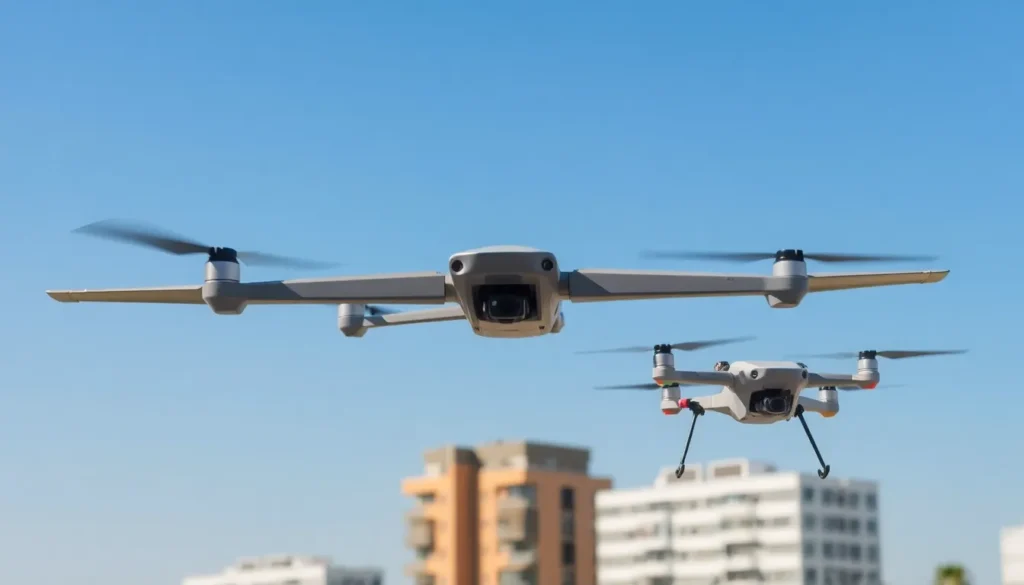
Cargo drones come in various types, each designed to address specific delivery needs and operational requirements. Understanding these distinctions helps users select the most suitable option for their logistics operations.
Fixed-Wing Cargo Drones
Fixed-wing cargo drones excel in long-distance flights due to their aerodynamic design. They possess greater flight efficiency, enabling them to cover larger areas and carry heavier payloads. These drones can reach speeds of up to 100 miles per hour, making them ideal for transporting goods over extensive routes. Companies utilize them for delivering medical supplies to remote locations or completing agricultural deliveries. Their ability to travel high altitudes reduces the impact of ground obstacles and enables faster deliveries.
Multirotor Cargo Drones
Multirotor cargo drones feature multiple rotors, enhancing their maneuverability and stability. These drones can take off and land vertically, allowing them to operate in confined spaces. With a lower payload capacity than fixed-wing models, multirotors typically transport lighter goods. Speeds of up to 20 miles per hour are common, focusing on urban deliveries. Businesses often rely on multirotor drones for last-mile delivery solutions, enabling quick transfers of small packages and improving customer satisfaction. Their adaptability makes them a popular choice for various logistical tasks.
Applications of Cargo Drones
Cargo drones are making significant strides across various sectors, enhancing efficiency and effectiveness in multiple applications.
Delivery Services
Delivery services benefit greatly from cargo drones. These unmanned aerial vehicles enable faster shipping methods, especially in urban areas and remote locations. Companies such as Amazon and UPS utilize drones to speed up last-mile deliveries, reducing wait times significantly. By leveraging real-time tracking capabilities, customers monitor shipments closely, ensuring transparency throughout the process. Cargo drones can carry small to medium-sized parcels, boosting delivery efficiency and minimizing operational costs.
Disaster Relief
Disaster relief efforts leverage cargo drones to reach affected areas quickly. They transport essential supplies, including food, water, and medical equipment, when traditional routes become inoperable. Organizations deploy drones in scenarios where ground transportation faces obstacles due to damage or flooding. Successful drone missions provide timely assistance, saving lives and supporting recovery operations. Innovations in navigation and payload capacity strengthen the role of cargo drones in emergency response situations.
Agriculture
Agriculture stands to gain from cargo drone technology. Farmers use these drones for transporting equipment and supplies across large fields. Their ability to fly short distances allows for efficient delivery of products directly to farmlands. Additionally, drones support precision agriculture by facilitating timely inspections of crops and livestock. The capability to cover vast areas quickly helps optimize productivity and reduce waste. As a result, farms operating cargo drones can enhance operational efficiency and sustainability.
Benefits of Cargo Drones
Cargo drones bring numerous advantages that enhance logistics and delivery services. These benefits include cost efficiency and speed of delivery, both of which significantly impact various industries.
Cost Efficiency
Cost efficiency stands out as a primary advantage of cargo drones. Reduced operational costs occur due to lower fuel consumption and minimal workforce requirements. Companies can save on transportation expenses, which can be reinvested into other business areas. Over time, investments in drone technology yield significant returns through streamlined operations. Targeted deployments in remote locations also eliminate the need for traditional delivery vehicles, further decreasing overhead costs. Therefore, businesses that incorporate cargo drones gain a competitive edge through economic benefits.
Speed of Delivery
Speed of delivery ranks high among the benefits of cargo drones. These drones navigate directly to destinations, bypassing ground traffic and logistical hurdles. Delivery times shrink dramatically, especially in urban settings where congestion often slows transportation. Many companies report delivery times cut in half when using drones compared to conventional methods. When emergencies arise, like natural disasters, cargo drones provide fast delivery of essential supplies. Increased operational efficiency results in heightened customer satisfaction, reinforcing the importance of swift transportation solutions in today’s market.
Challenges Facing Cargo Drones
Cargo drones face several challenges that impact their potential effectiveness in logistics. The two main hurdles include regulatory constraints and technical limitations.
Regulatory Hurdles
Regulatory barriers significantly impact the deployment of cargo drones. Different regions enforce various regulations, affecting operational capabilities. Many countries require specific certifications and flight permissions, complicating the deployment process. Compliance with air traffic control systems is also crucial for safe drone operations. Additionally, privacy concerns regarding drone surveillance can lead to stricter regulations. Organizations must navigate these complex legal landscapes to utilize cargo drones fully.
Technical Limitations
Technical challenges significantly hinder cargo drone efficiency. Battery life remains a critical concern, with most models only supporting limited flight times. Insufficient battery capacity restricts range and payload capabilities. Navigation systems, while improving, still encounter difficulties in unpredictable weather events. Advanced weather forecasting technology has yet to fully integrate with drone systems. Furthermore, payload restrictions can limit the types of goods transported. Overall, overcoming these challenges requires ongoing innovation and investment in drone technology.
Cargo drones are undeniably reshaping the logistics landscape with their ability to deliver goods more efficiently and quickly. Their diverse applications span various sectors from medical supplies to agricultural needs, making them a versatile solution for modern delivery challenges.
As technology continues to advance and regulations evolve, the potential for cargo drones to streamline operations and reduce costs is immense. Companies are recognizing the benefits of this innovative approach, paving the way for a future where aerial delivery becomes the norm.
While challenges remain, the ongoing investment in drone technology suggests a bright horizon for cargo drones, promising enhanced efficiency and improved service in the logistics industry.


