

The battle between electric vehicles and hybrids is heating up faster than a battery on a hot summer day. With the world shifting toward greener alternatives, drivers are faced with a crucial choice: go full electric or embrace the hybrid life. Each option comes with its own set of perks and quirks, making this decision more complicated than choosing between coffee or tea on a Monday morning.
Overview of Electric Vehicles and Hybrids
The automotive landscape is rapidly evolving. Both electric vehicles (EVs) and hybrid vehicles offer unique features and appeal to various types of drivers.
Definition of Electric Vehicles
Electric vehicles run exclusively on electricity. An EV contains a battery that powers electric motors for propulsion. Owners charge these batteries using home charging stations or public charging networks. Some popular examples include the Tesla Model 3 and the Nissan Leaf. Electric vehicles produce zero tailpipe emissions, contributing to reduced environmental impact. Additionally, they often feature fewer moving parts compared to traditional cars, leading to lower maintenance costs.
Definition of Hybrid Vehicles
Hybrid vehicles combine an internal combustion engine with an electric motor. This combination enables drivers to utilize both fuel types, improving fuel efficiency. They automatically switch between the gas engine and electric power to optimize performance. Common examples include the Toyota Prius and Ford Fusion Hybrid. Hybrids provide the flexibility of extended range due to their reliance on gasoline when needed. Emissions are generally lower than conventional vehicles, but they still produce some pollutants.
Key Differences Between Electric Vehicles and Hybrids
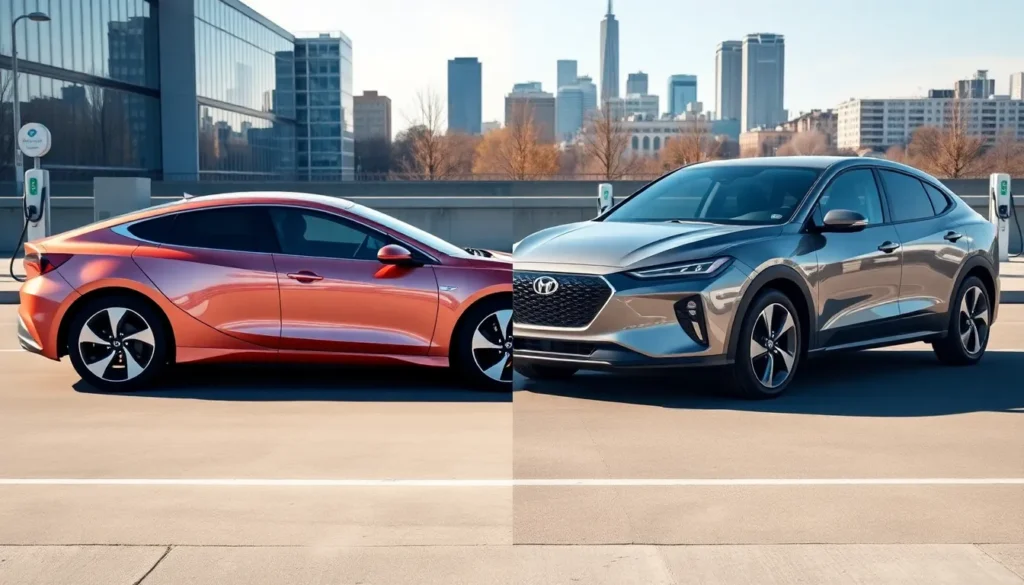
Electric vehicles and hybrids present distinct characteristics that influence consumer choices. Understanding these differences helps in making informed decisions.
Powertrain and Operation
Electric vehicles operate solely on electric power. Without an internal combustion engine, they provide a quieter and smoother driving experience. Vehicles like the Tesla Model 3 use electric motors for propulsion while relying on battery packs for energy. In contrast, hybrids utilize both an electric motor and a gasoline engine. These vehicles, such as the Toyota Prius, can switch between power sources, delivering added flexibility in various driving conditions. Operating modes in hybrids can vary, allowing for electric-only driving in low-speed scenarios or engine assistance for higher speeds.
Fuel Efficiency and Range
Electric vehicles typically offer superior fuel efficiency. They convert over 60% of electrical energy from the grid into power. Charging infrastructure plays a crucial role in their overall range, with many models exceeding 250 miles on a single charge. Hybrids, on the other hand, combine the strengths of gasoline engines and electric motors. These vehicles usually achieve around 50 miles per gallon, depending on driving conditions. Driving longer distances often becomes easier with hybrids, as their gasoline engines allow for fuel stops rather than waiting on charging stations. They bridge the gap for those hesitant to fully commit to electric-only options.
Advantages of Electric Vehicles
Electric vehicles (EVs) present numerous benefits, attracting eco-conscious consumers.
Environmental Impact
Zero tailpipe emissions define electric vehicles, significantly reducing air pollution. This characteristic contributes to cleaner urban environments, fostering healthier communities. Furthermore, renewable energy sources can power EVs, enhancing their sustainability. A study from the Union of Concerned Scientists indicates that EVs produce less than half the emissions of traditional gasoline vehicles over their lifespan. Pollution reduction plays a crucial role in combating climate change. Therefore, choosing an electric vehicle means actively participating in a greener future.
Cost Savings
Lower operational costs are another appealing aspect of electric vehicles. Maintenance expenses are reduced because EVs lack components like oil filters and exhaust systems. Battery efficiency leads to fewer energy costs, with charging rates typically lower than gasoline prices. According to the U.S. Department of Energy, electric vehicle owners save an average of $800 to $1,000 per year on fuel compared to gas-powered vehicles. Tax credits and incentives further enhance the affordability of EVs. Overall, cost efficiency makes electric vehicles a smart financial choice for drivers.
Advantages of Hybrid Vehicles
Hybrid vehicles offer several significant advantages for drivers looking to balance environmental concerns with practical driving needs. They provide a unique blend of efficiency and accessibility.
Flexibility and Convenience
Flexibility ranks as a major benefit of hybrid vehicles. These vehicles can seamlessly switch between electric and gasoline power, ensuring drivers have ample range for longer trips. Convenience arises from not needing to rely solely on electric charging stations, which can be limited in some areas. Hybrid technology allows for better adaptability in various driving conditions, making them suitable for city commuting and long-distance travel alike. This versatility stands out, especially for those who may face range anxiety with fully electric options.
Driving Experience
Drivers enjoy a unique experience in hybrid vehicles. Smooth transitions between electric and gasoline power create a responsive feel during acceleration. Powerful engines enhance performance on highways, while electric motors contribute to quieter rides in urban settings. Regenerative braking adds to the driving experience, allowing hybrids to efficiently recover energy during stops. Overall, hybrids strike a balance between power and comfort, making every trip enjoyable and efficient.
Choosing between electric vehicles and hybrids ultimately depends on individual preferences and driving needs. Electric vehicles offer a cleaner, more sustainable option with significant cost savings and zero emissions. They’re perfect for those committed to environmental impact and enjoy the benefits of lower maintenance costs.
On the other hand, hybrids provide flexibility and convenience, especially for long-distance travel where charging infrastructure may be lacking. Their ability to switch between electric and gasoline power makes them a practical choice for many drivers.
Both options contribute to reducing carbon footprints and improving air quality. As technology advances and infrastructure develops, the decision will likely evolve, but understanding the unique benefits of each vehicle type is essential for making an informed choice.


