

In a world where everyone’s a photographer, the secret to standing out might just be soaring above the rest—literally. Enter photography drones, the high-flying gadgets that turn ordinary shots into breathtaking aerial masterpieces. Whether it’s capturing a wedding from a bird’s eye view or snapping stunning landscapes that’ll make your friends green with envy, these drones are the ticket to elevating any photographer’s game.
Overview of Photography Drones
Photography drones offer an innovative way for photographers to create breathtaking aerial images. These tools enhance creativity and elevate photographic skills, making each shot unique and impactful.
What Are Photography Drones?
Photography drones are unmanned aerial vehicles equipped with cameras. These devices can capture images and videos from various altitudes and angles, providing perspectives traditional photography can’t achieve. Modern photography drones include features like GPS, stabilization systems, and often, live streaming capabilities, making them accessible for all skill levels.
Benefits of Using Photography Drones
Using photography drones provides several advantages. First, aerial shots enable photographers to capture expansive landscapes and dynamic compositions. Second, drones can access hard-to-reach locations, facilitating unique opportunities for content creation. Third, many drones come with editing software, streamlining the post-production process. Fourth, incorporating drone photography can significantly enhance a photographer’s portfolio, attracting potential clients. Lastly, reduced equipment costs make drones a budget-friendly option for capturing high-quality imagery.
Types of Photography Drones
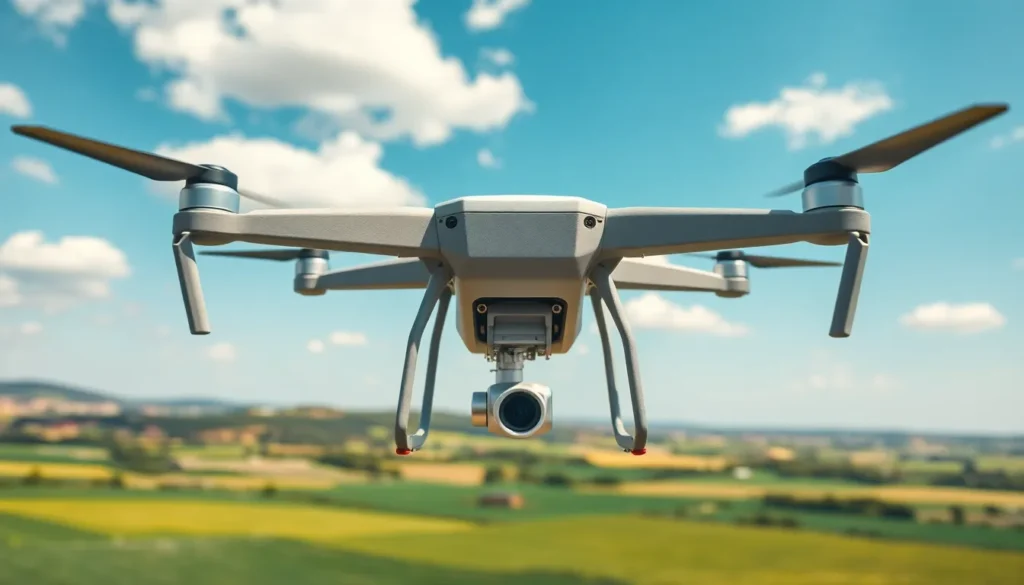
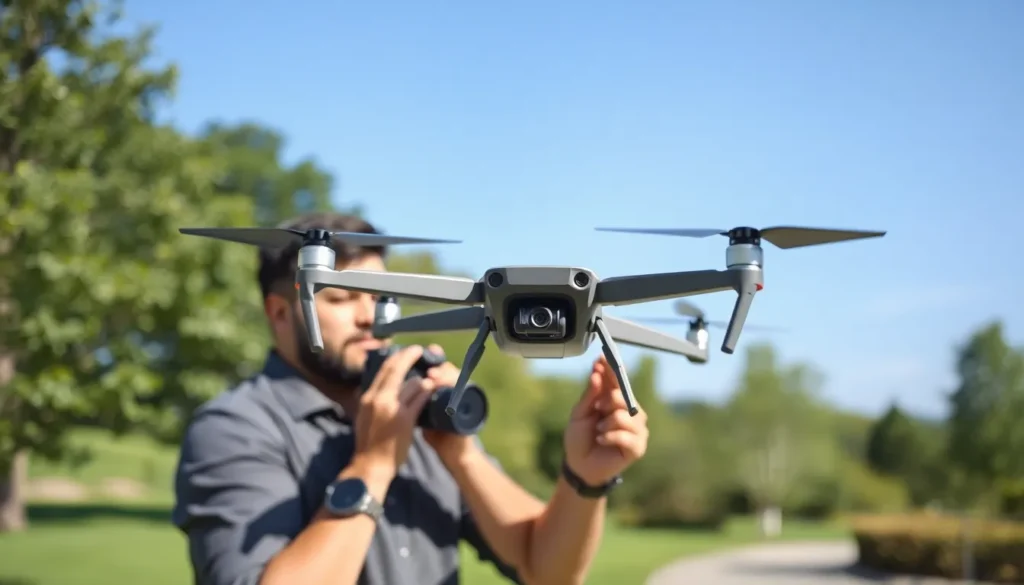
Photography drones fall into various categories depending on their intended use and features. Understanding these types helps photographers choose the right drone for their needs.
Consumer Drones
Consumer drones often cater to hobbyists and casual photographers. Typically lightweight and easy to operate, these drones provide high-quality images at a reasonable price. Features like GPS stability, automated flight modes, and user-friendly interfaces enhance the user experience. Many consumer drones come with built-in cameras that capture 4K video and 12-megapixel still images, making them ideal for personal projects like family gatherings or vacations. Popular models include the DJI Mini and Parrot Anafi, known for their portability and versatility.
Professional Drones
Professional drones target serious photographers and videographers. Equipped with advanced cameras and stabilization technology, these drones capture breathtaking aerial shots with exceptional detail. They often support interchangeable lenses, allowing for greater creative control. Functionality such as live HD streaming and extended flight time sets them apart from consumer models. Drones like the DJI Matrice and Skydio 2 suit commercial uses, including real estate photography and cinematography. Professionals appreciate these tools for their reliability and the quality of images they produce in demanding conditions.
Features to Consider When Choosing Photography Drones
Choosing a photography drone requires attention to specific features that enhance usability and image quality. Key features include camera quality, flight time and range, and stability and control.
Camera Quality
Camera quality plays a crucial role in determining the overall photography experience. High-resolution sensors, ranging from 12 MP to 48 MP, capture detailed and vibrant images. Optical zoom capabilities allow for diverse framing options without losing image clarity. Additionally, consider shooting modes such as RAW for greater editing flexibility. Investing in a drone equipped with a gimbal stabilizer minimizes motion blur, ensuring smooth video capture during flight.
Flight Time and Range
Flight time and range significantly impact the drone’s usability. Most consumer drones provide a flight time of 20 to 30 minutes on a single charge, allowing for ample exploration. Understanding the operational range, typically between 1 to 7 kilometers, will help select a drone suited for specific photography needs. Longer ranges facilitate dynamic shots from various altitudes, while shorter ranges ensure maximum control and safety. Extended battery packs or spare batteries enhance the overall shooting experience.
Stability and Control
Stability and control are vital for achieving high-quality images. Advanced drones incorporate GPS and optical flow sensors to maintain precise positioning in the air. This stability is critical when capturing images in windy conditions or tight spaces. Furthermore, user-friendly flight controls, including smartphone integration, afford flexibility and ease of maneuverability. Drones with programmable flight paths allow photographers to plan shots in advance, ensuring consistent results.
Tips for Capturing Stunning Photos with Drones
Capturing stunning aerial photographs requires practical techniques and effective post-processing methods. Following these tips maximizes the potential of photography drones.
Techniques for Aerial Photography
Framing shots from a unique perspective proves essential in aerial photography. Utilize the rule of thirds to create balanced images. Experimenting with various altitudes helps find the best angles for landscapes or events. Lighting plays a crucial role; shoot during golden hours for softer, appealing light. Adjusting settings like ISO and shutter speed increases image clarity, especially in dynamic situations. Flying in less windy conditions provides stability, reducing motion blur. Try different flight patterns, such as circling around subjects, to add depth to the composition.
Post-Processing Tips
Effective post-processing enhances the overall impact of drone photography. Start with basic adjustments to exposure, contrast, and saturation. Using software like Adobe Lightroom or Photoshop allows for precise editing. Layering techniques can help highlight specific areas in the image. Consider correcting lens distortion and sharpening the final photo for a polished look. Implementing filters can create mood; experiment with different styles to suit the subject. Saving images in high-resolution formats ensures they remain sharp for print or digital displays. Consistent post-processing techniques maintain a cohesive aesthetic across a portfolio.
Photography drones have revolutionized the way photographers capture and present their work. By offering unique perspectives and enhancing creativity they allow both amateurs and professionals to elevate their portfolios. The ability to access hard-to-reach locations and capture expansive landscapes makes these drones invaluable tools in any photographer’s arsenal.
As technology continues to advance the options available in photography drones will only expand. With careful consideration of features and capabilities photographers can select the perfect drone to suit their needs. Embracing this innovative approach to photography can lead to stunning results that stand out in a competitive market.


